
Published 1 July 2025
What is DCP Testing — Dynamic Cone Penetrometer Testing Explained for Engineers and Contractors in Australia
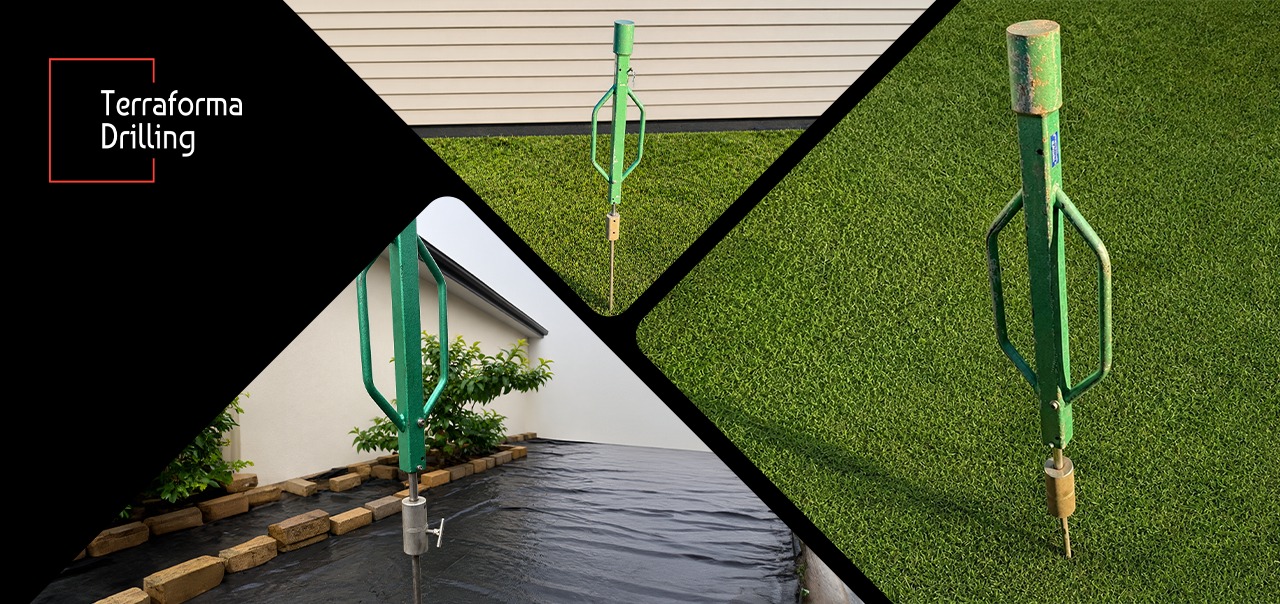
DCP testing is a field method used to measure the strength of shallow soil by recording how far a steel cone penetrates the ground with each standardised hammer blow. The lower the penetration per blow, the stronger and denser the material. The higher the penetration per blow, the weaker and softer the ground. Results are available immediately on site, making DCP testing one of the most practical tools available for pavement subgrade assessment, compaction verification, and shallow ground investigations across Australia.
How Does a Dynamic Cone Penetrometer Test Work?
The test is conducted in accordance with AS 1289.6.3.2. A standardised drop hammer is released from a set height onto a drive rod fitted with a steel cone. After each blow, the operator records how far the cone has penetrated the ground. This measurement — the penetration per blow — is what engineers use to understand soil strength at that depth.
No borehole is required. No laboratory samples are collected during the test itself. Results are produced and read in the field as the test progresses, which is what makes DCP testing practical for projects where ground strength information is needed quickly before construction proceeds.
The test provides reliable information in the upper soil profile. Beyond a certain depth, friction between the drive rod and the surrounding soil begins to influence the recorded penetration, making the result less representative of the cone resistance alone. Where ground information is required at greater depth, DCP testing is typically combined with Standard Penetration Testing from a borehole.
What Does a DCP Test Result Mean?
The penetration rate from a DCP test tells the engineer how much resistance the ground is offering the cone at each depth.
- Low penetration per blow means the cone is not travelling far with each hammer blow. The soil is offering high resistance, indicating dense, stronger material.
- High penetration per blow means the cone is advancing further into the ground with each blow. The soil is offering low resistance, indicating weaker, softer material.
The geotechnical consultant uses the penetration rate to assess subgrade conditions across a site. In pavement engineering, the penetration rate is commonly correlated with the California Bearing Ratio (CBR), which allows the geotechnical consultant to estimate subgrade bearing capacity from the field measurements collected during the investigation.
DCP test results provide an indication of field conditions at the time of testing. The geotechnical consultant considers the complete site investigation data, pavement design requirements, and project loading before making any treatment or design recommendation.
When Is DCP Testing Specified?
Before pavement construction
DCP testing helps the engineer assess formation-level strength before pavement design is finalised. It can identify weak areas between borehole locations that may not have been captured during the main investigation programme.
During earthworks and compaction
After fill placement or subgrade preparation, DCP testing gives the engineer penetration data to assess whether the required design strength has been achieved before the next construction stage begins.
Pavement rehabilitation investigations
On rehabilitation projects, DCP testing gives the engineer insight into existing pavement layer conditions without substantial excavation or coring.
Constrained and tight-access sites
Where mobilising a drilling rig is not practical, DCP testing provides a rapid way to assess shallow ground conditions. The equipment is portable and hand-operated, making it suitable for sites where access is restricted.
Where deeper subsurface information is also needed, DCP testing is commonly combined with Standard Penetration Testing and borehole drilling to give the geotechnical consultant a more complete picture of site conditions.
What Affects DCP Test Accuracy?
Reliable DCP test results depend on consistent field procedure throughout the programme.
Cone condition matters on every test. A worn or damaged cone tip changes penetration resistance and can produce readings that do not accurately represent the ground at that location.
Rod alignment must be maintained throughout. If the drive rod leans during testing, friction between the rod and the surrounding soil increases independently of the cone, producing a result that does not accurately represent ground conditions at that depth.
Gravel and cobbles in the soil profile can temporarily obstruct the cone, producing isolated readings that do not represent the general ground strength at that location. The geotechnical consultant considers these anomalies when interpreting the full penetration profile.
Depth limitations apply. Once rod friction begins to influence the recorded penetration, the measurement no longer reliably represents cone resistance alone. The geotechnical consultant identifies this point in the profile and determines whether deeper investigation methods are warranted.
DCP Testing and SPT Testing — How They Work Together
DCP testing and Standard Penetration Testing serve different purposes and different depth ranges. Rather than replacing each other, they are regularly used together on the same investigation programme.
DCP testing provides rapid shallow ground strength information without a borehole. Standard Penetration Testing is conducted inside a borehole and recovers a physical soil sample with every test interval, providing ground information well beyond the depth range available to DCP testing.
On a typical pavement and foundation investigation across Sydney and NSW, DCP testing at formation level gives the civil engineer penetration data for pavement design. If the same site also requires foundation information for a structure, a borehole with SPT testing provides the deeper ground data. Both can be completed in one mobilisation, which reduces overall investigation time and cost.
Reliable DCP Testing Across Sydney and NSW
TerraForma Drilling conducts DCP testing as part of geotechnical and pavement investigation programmes across Greater Sydney and regional NSW. DCP testing is regularly combined with solid flight auger drilling and SPT testing in a single mobilisation, giving the geotechnical consultant both shallow penetration data and deeper ground profile information from one field programme.
Disclaimer: This content is for general informational purposes only. It does not constitute professional geotechnical or engineering advice and may not be suitable for all sites or ground conditions. TerraForma Drilling accepts no liability for reliance on this content. Always consult a qualified geotechnical engineer for project-specific advice.
FAQs
What is DCP testing used for?
DCP testing is used to assess shallow soil strength for pavement design, earthworks, compaction assessment, and pavement rehabilitation investigations. It is also used on constrained sites where a drilling rig cannot access the investigation location.
How deep does DCP testing go?
DCP testing provides reliable results in the upper soil profile. Beyond a certain depth, rod friction begins to influence the recorded penetration and the result no longer represents cone resistance alone. Where deeper ground information is required, borehole-based testing methods are used.
What does a high penetration rate mean in a DCP test?
A high penetration per blow means the cone is advancing further into the ground with each hammer blow. This indicates weaker, softer material with lower resistance to penetration. The geotechnical consultant assesses what this means for the project design or construction requirements.
What does a low penetration rate mean in a DCP test?
A low penetration per blow means the cone is not travelling far with each hammer blow. The soil is offering high resistance, indicating denser, stronger material.
What Australian Standard covers DCP testing?
DCP testing in Australia is performed in accordance with AS 1289.6.3.2, which specifies the equipment, procedure, and reporting requirements.
When is DCP testing used alongside SPT testing?
DCP testing is used where shallow subgrade strength information is needed quickly and without a borehole. SPT testing is used where deeper ground information and physical soil samples are required. On many investigations across Sydney and NSW, both tests are conducted in the same field programme.
Need Practical Site Investigation Support?
TerraForma Drilling supports geotechnical and environmental consultants with drilling, testing, and groundwater monitoring services across Sydney and NSW. Get a quote or view our services.