
Published 1 July 2025
How Geotechnical Drilling Works in Sydney: What Happens on Your Site and Why It Depends on Where You're Building
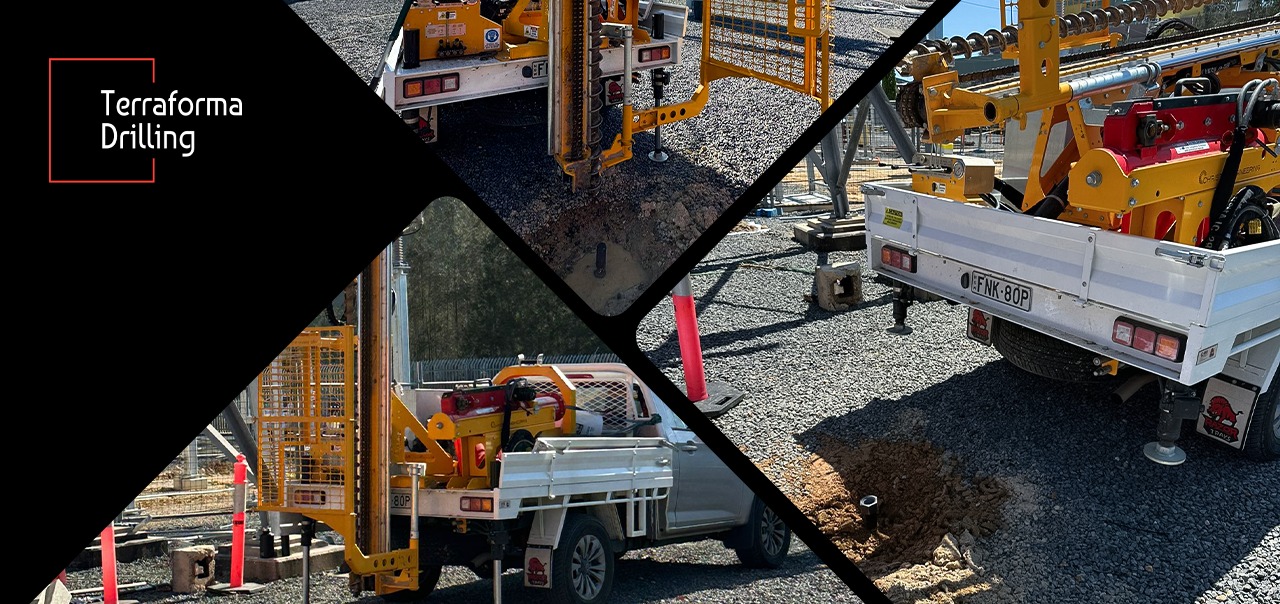
Every construction project begins with one unknown — the ground beneath the site. Until engineers understand what lies below, they can't confidently recommend foundations, assess excavation risks, or determine if the site suits the proposed development.
That's where the geotechnical drilling process begins.
A geotechnical investigation gathers the information engineers need by drilling boreholes, recovering soil and rock samples, conducting field tests, and recording groundwater conditions.
While the process follows the same principles, no two investigations are identical. Ground conditions vary across Sydney, so depth, drilling methods, and testing requirements often differ by site.
Whether you're building a new home, commercial development, or civil infrastructure, understanding what happens during geotechnical drilling helps explain why this early investigation is one of the most important stages of a project.
Every Site Investigation Starts Before the Drill Arrives
The site investigation process begins well before drilling equipment arrives.
The geotechnical consultant defines the investigation scope based on the proposed development. Factors like building type, expected loads, site history, and local geology determine the number of boreholes, target depths, and required field testing.
Before drilling, underground services are identified, site access confirmed, and appropriate equipment selected. In many residential and infill developments across Sydney, restricted access means a compact Solid Flight Auger (SFA) rig is often the most practical solution for reaching areas larger rigs cannot access.
Careful planning at this stage ensures the field investigation delivers the information engineers need while minimising site disruption.
What Happens During Geotechnical Drilling?
Although projects have different investigation requirements, the geotechnical drilling process generally follows the same sequence.
1. The Borehole Is Drilled
The drilling rig advances through the ground using the selected method. As the borehole progresses, the team observes changes in soil and rock, noting where each layer begins and ends.
2. Soil Samples Are Recovered
Representative samples are collected throughout the investigation and retained for laboratory testing. This allows engineers to classify the site's soils and understand how they may perform under future loading.
3. In-Situ Testing Is Performed
Where specified, Standard Penetration Testing (SPT) is carried out at selected depths inside the borehole. The recorded SPT values provide important information about soil strength and consistency that supports foundation design and settlement assessment.
4. Groundwater Is Recorded
If groundwater is encountered during drilling, its depth and conditions are documented. Groundwater can influence excavation methods, foundation design, and construction planning, so accurate observations are important.
5. The Borehole Is Completed
Once the required depth is reached and all field testing is completed, the borehole is backfilled or sealed in accordance with project requirements and standards.
By the end of the investigation, the drilling team has collected the field data that forms the basis of the geotechnical assessment.
The Value of Geotechnical Drilling Goes Beyond the Borehole
The investigation's purpose isn't just to drill into the ground but to build an accurate picture of the site's subsurface conditions.
During geotechnical borehole investigations across Australia, the drilling team records data that engineers later use to prepare reports and foundation recommendations.
This information commonly includes:
- Soil and rock layers encountered at different depths.
- Sample recovery for laboratory classification.
- Standard Penetration Test (SPT) results.
- Groundwater observations.
- Changes in subsurface conditions across the site.
Each piece of information helps engineers understand how the ground will behave under the proposed structure. Together, these observations provide more value than any single test result.
Why Ground Conditions Change the Investigation
One reason no two investigations are alike is Sydney's variable geology. Two sites a few kilometres apart can require different drilling methods, testing programmes, and assessments because ground conditions differ.
| Location or Ground Type | Typical Conditions | Why It Matters |
|---|---|---|
| Hawkesbury Sandstone areas | Dense sandstone and residual soils | Rock depth influences excavation and foundation design. |
| Wianamatta Shale regions | Reactive clay soils | Ground movement affects site classification and footing design. |
| Coastal suburbs | Marine sands and soft clays | Settlement and groundwater often require closer assessment. |
| Urban redevelopment sites | Fill and variable ground | Additional investigation may be needed to confirm founding conditions. |
Ground conditions also influence practical aspects of the investigation. Hard rock may slow drilling, groundwater may require changes to procedures, and uncontrolled fill may prompt engineers to request additional boreholes or testing.
Rather than following a fixed template, every geotechnical drilling process adapts to site conditions. That's why field observations, sample recovery, and accurate borehole logging remain essential throughout the investigation, regardless of project size or complexity.
From Bore Logs to Engineering Decisions
Once drilling is complete, TerraForma Drilling's role ends at the borehole. The geotechnical consultant collects the bore logs, soil samples, SPT results, and groundwater observations and uses them to prepare a practical engineering assessment. The consultant prepares recommendations that may include:
- Site classification for residential developments.
- Foundation and footing recommendations.
- Allowable bearing capacity.
- Settlement considerations.
- Groundwater and excavation advice.
- Any additional investigation or ground improvement requirements.
It's important to distinguish the two roles. The drilling contractor drills the borehole, installs any required monitoring wells, and provides soil samples at the requested depths to the engineer. The geotechnical consultant then analyses the field data and prepares the engineering report used by structural engineers, builders, and certifiers.
Reliable Ground Information Starts With Consistent Fieldwork
A geotechnical report's quality depends on the quality of field data collected during the investigation.
Accurate borehole locations, consistent drilling procedures, representative soil sampling, and complete field records all contribute to a reliable assessment. Missing samples, incomplete logs, or inconsistent testing can leave gaps that require additional investigation or create uncertainty during design.
TerraForma Drilling supports geotechnical consultants across Sydney and regional NSW by carrying out borehole drilling, Standard Penetration Testing (SPT), and soil sampling using calibrated equipment and established field procedures.
The resulting data helps consultants prepare site-specific recommendations while engineering interpretation remains entirely their responsibility.
Every Site Investigation Tells a Different Story
Although the geotechnical drilling process follows a consistent methodology, the information gathered is unique to every site. Ground conditions, geology, groundwater, and previous land use all influence what the investigation uncovers and how engineers respond.
Understanding how borehole drilling works is useful because it highlights that drilling is only one part of a broader investigation. The real value lies in the reliable field information it provides, allowing engineers to design foundations and earthworks based on actual site conditions rather than assumptions.
For commercial developers and consultants alike, investing in a thorough investigation at the start of a project reduces uncertainty and helps support better engineering decisions throughout construction.
Getting Ready for Foundation Design?
Every geotechnical recommendation starts with reliable field data. TerraForma Drilling conducts borehole drilling and field testing to help consultants assess site conditions before construction begins.
Disclaimer: This content is for general informational purposes only. It does not constitute professional geotechnical or engineering advice and may not be suitable for all sites or ground conditions. TerraForma Drilling accepts no liability for reliance on this content. Always consult a qualified geotechnical engineer for project-specific advice.
FAQs
Who carries out the geotechnical drilling process?
The field investigation is typically carried out by a specialist drilling contractor, while a geotechnical consultant specifies the scope of the investigation, interprets the results, and prepares the engineering report.
How long does a geotechnical site investigation take?
Fieldwork for a standard residential project is often completed within a day, depending on the number and depth of boreholes. Larger commercial or infrastructure investigations may require several days, followed by laboratory testing and report preparation.
What happens during geotechnical drilling?
During geotechnical drilling, boreholes are advanced to the required depth, soil and rock samples are collected, in-situ testing such as Standard Penetration Testing (SPT) may be performed, groundwater observations are recorded, and detailed borehole logs are prepared for the geotechnical consultant.
Does every construction project require borehole drilling?
Not every project requires the same scope of investigation, but most residential, commercial, and civil developments require some form of geotechnical investigation to support foundation design and satisfy project or regulatory requirements.
Why do ground conditions vary so much across Sydney?
Sydney's geology includes sandstone, shale, reactive clays, marine sediments, and areas of uncontrolled fill. These variations mean neighbouring sites can have very different subsurface conditions, making site-specific geotechnical investigations essential before design and construction begin.
Need Practical Site Investigation Support?
TerraForma Drilling supports geotechnical and environmental consultants with drilling, testing, and groundwater monitoring services across Sydney and NSW. Get a quote or view our services.