
Published 1 July 2025
What Is a Soil Test for Construction in Australia? What Builders and Developers Need to Know
The foundations of a building are only as reliable as the information used to design them. That's why a soil test for construction is among the first geotechnical investigations conducted for residential, commercial, and civil projects.
A soil test determines the site's ground conditions, helping engineers assess how the soil will behave under the weight of a building or civil structure. It identifies factors such as soil type, bearing capacity, groundwater conditions, and ground reactivity, enabling structural engineers to design foundations suited to the site.
Across NSW, a soil test for construction is a standard requirement for most building projects. It supports site classification under AS 2870, helps satisfy council and certifier requirements, and reduces the risk of costly foundation issues later in the project.
What's Actually Included in a Soil Test?
A soil test for construction is more than collecting a few soil samples. It is a structured geotechnical investigation that gives engineers the information they need before foundation design begins.
A typical investigation includes three key stages.
Borehole Drilling or Test Pitting
The investigation starts by exposing the subsurface using boreholes or test pits. Residential sites typically require investigations between 3 and 6 metres deep, while commercial and infrastructure projects may require greater depths.
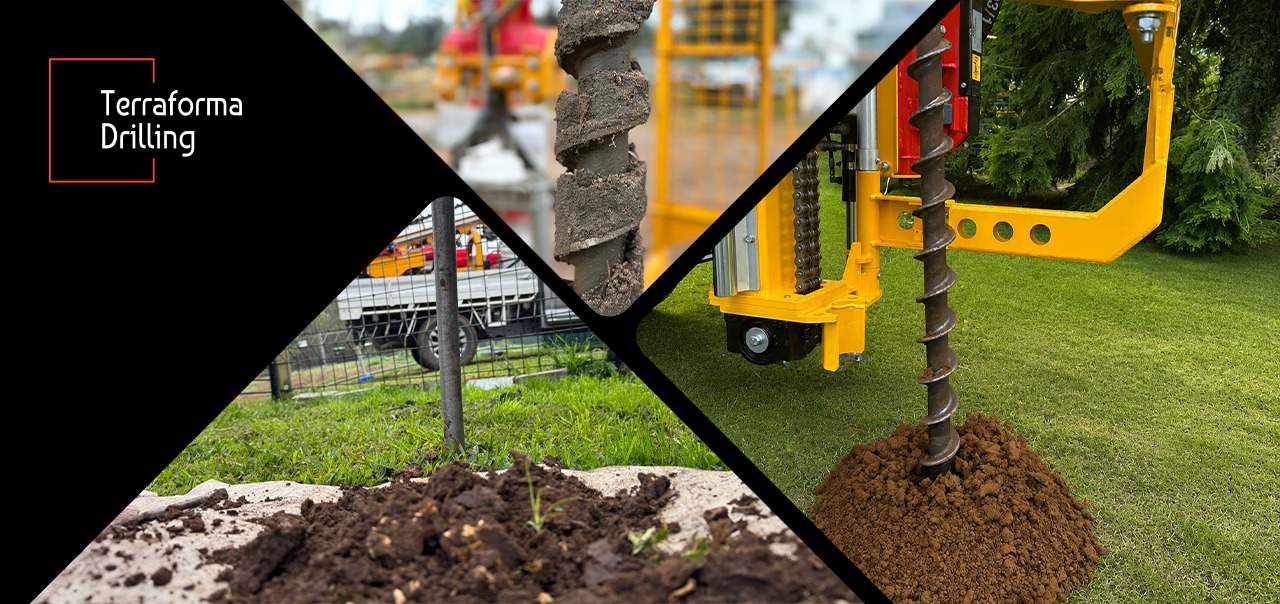
Across Sydney, contractors commonly go for Solid Flight Auger (SFA) drilling because it can access narrow lots, restricted work areas, and sites with limited overhead clearance.
In-Situ Field Testing
As drilling progresses, engineers often specify Standard Penetration Testing (SPT) to assess soil strength at selected depths. These field measurements help estimate bearing capacity, settlement characteristics, and other engineering properties that influence foundation design.
Soil Sampling and Laboratory Testing
Recovered soil samples are sent to a geotechnical laboratory for classification and testing. Depending on the project, this may include particle size analysis, moisture content, Atterberg limits, and other engineering properties.
The drilling contractor completes the field investigation, while the geotechnical consultant interprets the data and prepares the engineering report.
From Fieldwork to Report: What You'll Receive
Once the investigation is complete, the geotechnical consultant prepares the soil test report for construction. Structural engineers, certifiers, builders, and developers rely on this document.
A typical report includes:
- Soil profile showing the different ground layers encountered during drilling.
- SPT results that indicate soil strength at various depths.
- Groundwater observations, where applicable.
- The geotechnical consultant prepares the site classification report in accordance with AS 2870.
- They also provide foundation recommendations, including allowable bearing capacity and any required ground improvement.
TerraForma Drilling facilitates the investigation by drilling the borehole and collecting soil samples at the specified depths. The geotechnical consultant is responsible for recording the borehole log, interpreting the field data, and preparing the final engineering report.
Why Does Site Classification Matter Before Construction Begins?
One of the most important outcomes of the investigation is the site classification report.
Prepared under AS 2870, it classifies the site's expected ground movement due to moisture changes and determines the appropriate footing system for the site.
| Site Class | Ground Behaviour |
|---|---|
| A | Stable, non-reactive soil |
| S | Slightly reactive soil |
| M | Moderately reactive soil |
| H1 | Highly reactive soil |
| H2 | Highly reactive soil with greater movement potential |
| E | Extremely reactive soil |
| P | Problem site requiring project-specific engineering assessment |
Across Greater Sydney, Class M sites are common. Class P sites require additional engineering because fill, uncontrolled ground conditions, or variable subsurface materials mean standard footing designs may not be suitable.
Without an accurate site classification report, foundation design becomes guesswork rather than engineering.
What Influences the Cost of a Soil Test?
The soil test for construction cost depends on the project's scope rather than on a fixed price. Factors such as the number of boreholes, drilling depth, site access, and testing requirements all influence the final cost.
Typical NSW field investigation cost drivers are:
Project type and scale
Larger and more complex projects require more boreholes, greater depths, and additional testing — all of which increase the field programme scope and the overall cost.
Number of boreholes and testing depth
The more boreholes required to adequately characterise the site, and the deeper each borehole needs to go to reach competent material, the more field time is involved.
Site access conditions
Tight-access sites, low-clearance structures, and constrained urban environments require specialist equipment and additional setup time compared to open and easily accessible sites.
Ground conditions encountered
Hard rock at shallow depth, variable fill profiles, or high groundwater levels can slow drilling progress and require additional sampling or equipment changes on site.
Mobilisation distance
Projects in regional NSW involve greater travel distance and time than metropolitan Sydney investigations, which is factored into the overall programme cost.
Laboratory testing requirements
Where the geotechnical consultant requires soil samples to be sent for laboratory analysis, the laboratory fee is additional to the field drilling cost.
Restricted-access sites, shallow rock, or groundwater conditions may require additional time or specialised equipment, increasing investigation costs.
While every project differs, the cost of a site investigation is typically small compared with the expense of rectifying foundation issues caused by unknown ground conditions.
Why Builders Don't Leave Soil Testing Until the Last Minute
Many construction delays begin with the discovery of unexpected ground conditions after design work has already started.
Completing a soil test for construction for NSW projects early allows structural engineers to design foundations using accurate site-specific information from the outset. It also helps identify reactive soils, uncontrolled fill, groundwater, or variable subsurface conditions before they affect budgets or construction programmes.
For builders and developers, early investigations reduce design changes, minimise delays, and provide greater certainty before work begins on site.
Reliable Site Data Starts Long Before Foundation Design
Every geotechnical recommendation begins with accurate field information.
TerraForma Drilling supports geotechnical consultants, builders, and developers by carrying out borehole drilling, Standard Penetration Testing (SPT), and soil sampling across Sydney and regional NSW. The resulting field data forms the basis of the consultant's engineering assessment, while interpretation, site classification, and foundation recommendations remain the responsibility of the geotechnical consultant.
The Right Ground Information Leads to Better Construction Decisions
A soil test for construction is more than a planning requirement. It's the foundation of informed decision-making. By understanding ground conditions before construction begins, builders and developers can reduce uncertainty, avoid costly surprises, and give structural engineers the information they need to design appropriate foundations from the start.
Getting Ready for Foundation Design?
Every foundation starts with reliable ground information. TerraForma Drilling delivers borehole drilling, soil sampling, and field testing that support geotechnical investigations across Sydney and regional NSW.
Disclaimer: This content is for general informational purposes only. It does not constitute professional geotechnical or engineering advice and may not be suitable for all sites or ground conditions. TerraForma Drilling accepts no liability for reliance on this content. Always consult a qualified geotechnical engineer for project-specific advice.
FAQs
Do I need a soil test before building in NSW?
In most cases, yes. Residential projects generally require a geotechnical investigation and site classification report before structural engineers can complete footing and slab designs in accordance with AS 2870.
How long does a soil test for construction take?
Field investigations for a standard residential site are often completed within a day. Laboratory testing and preparation of the engineering report usually take one to two additional weeks, depending on project complexity.
Is a soil test the same as a site classification report?
No. The soil test refers to the field investigation and laboratory testing, while the site classification report is the engineering document prepared by the geotechnical consultant to classify the site in accordance with AS 2870.
Can builders arrange a soil test directly?
Yes. Builders and developers can engage a drilling contractor directly for field investigations or appoint a geotechnical consultant to manage the entire investigation programme.
What happens if construction starts without a soil test?
Designing foundations without site-specific ground information increases the risk of settlement, reactive soil movement, and costly structural defects. A proper geotechnical investigation helps identify these risks before construction begins.
Need Practical Site Investigation Support?
TerraForma Drilling supports geotechnical and environmental consultants with drilling, testing, and groundwater monitoring services across Sydney and NSW. Get a quote or view our services.